A serving board should do more than hold bread and cheese. It should feel good in the hand, sit beautifully on the table, and carry a story worth sharing when guests ask about it. Handmade olive wood products bring that kind of presence to the kitchen: useful objects shaped from a tree that has lived a long, productive life in the Mediterranean landscape.
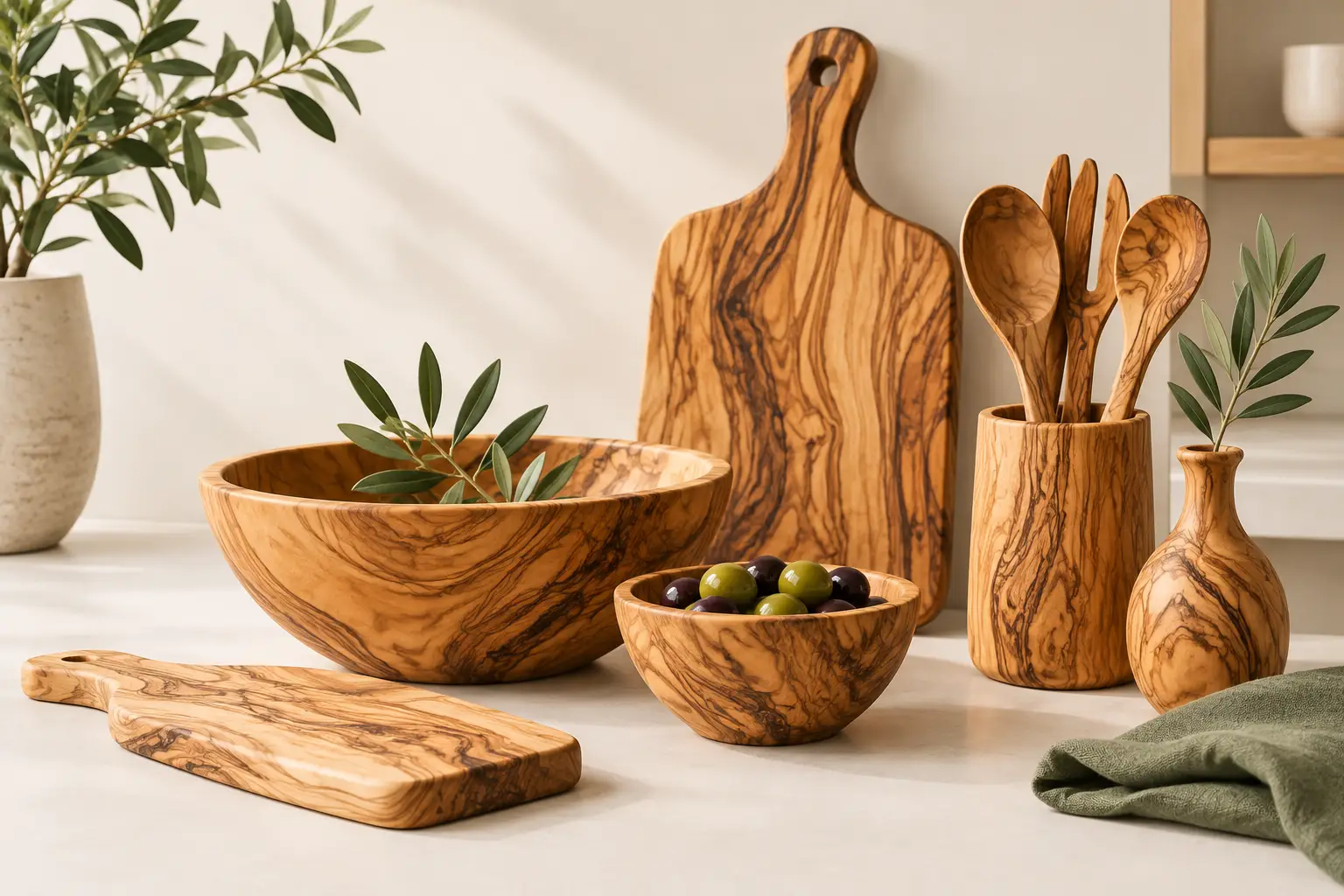
Olive wood is not chosen for perfect uniformity. Its appeal lies in the opposite. Deep honey tones, swirling dark veins, small knots, and natural movement make every board, spoon, bowl, and platter distinctly its own. For a home that values materials with character over factory sameness, that difference is felt every day.
What Makes Olive Wood Worth Keeping
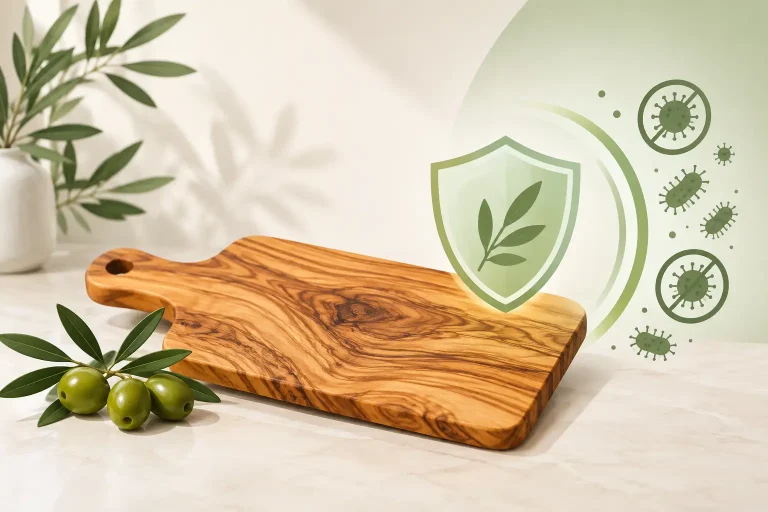
Olive trees grow slowly, producing exceptionally dense hardwood. That density gives olive wood a reassuring weight and helps it stand up to regular use in the kitchen and at the table. It is naturally resistant to odors and is often valued for its naturally antibacterial qualities, making it especially well suited to serving pieces, utensils, and cutting boards when cared for properly.
The wood is also remarkably expressive. A pale, quiet grain may run alongside dramatic dark lines in the same piece. No two sections of an olive tree grow alike, so no two handmade pieces can be identical. This is not a flaw to be corrected. It is the evidence of a real material, shaped by years of weather, soil, pruning, and fruiting.
There is a practical trade-off to this individuality. If you are furnishing a large table and need six bowls that match exactly, ceramic or factory-produced woodware may be the better fit. Olive wood is for those who prefer a gathered, considered table where each piece belongs together without being a copy of the next.
Handmade Olive Wood Products Begin With Patience
Fine olive wood kitchenware starts long before carving. Responsible makers do not cut down living olive trees simply to make homewares. The best material comes from seasonal pruning and retired fruiting trees, after the tree has completed its useful agricultural life.
At Olive Wood Shop, century-old Cretan olive wood is selected from these sources and dried for up to two years before it reaches the workshop bench. That waiting matters. Wood retains moisture when freshly cut, and rushing the drying process can lead to unnecessary warping or cracking later. Slow drying allows the material to settle before it becomes a bowl, a spoon, or a board intended for daily use.
Each piece is then shaped by hand, often from a single block of wood. A true one-piece carving has a quiet integrity: there are no glued seams to disguise, no engineered layers, and no attempt to force the wood into an unnatural sameness. The maker reads the grain, adjusting the shape around it rather than treating the wood as a blank, interchangeable surface.
After carving, the piece is sanded through five grits until it feels smooth but still alive to the touch. It is finished with food-safe Cretan olive oil, not lacquer. This distinction matters. Lacquer can create a hard, glossy film that separates your hand from the wood and can eventually chip. An oil finish lets the grain remain visible and can be refreshed at home over time.
Choosing the Right Piece for How You Gather
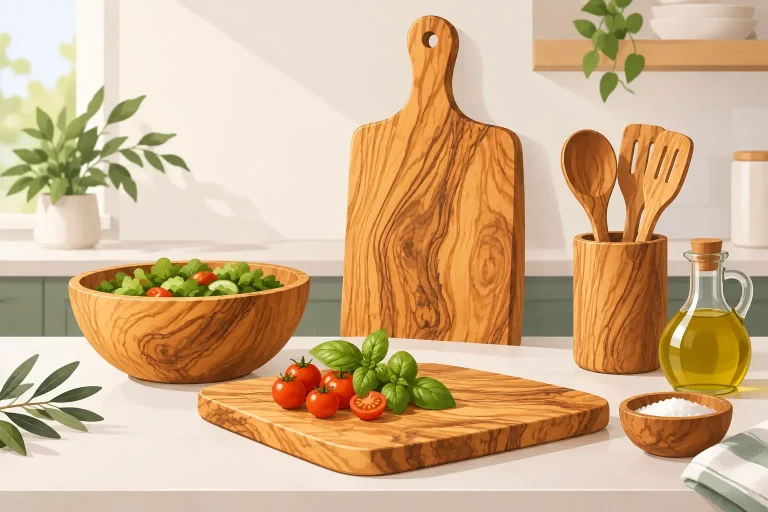
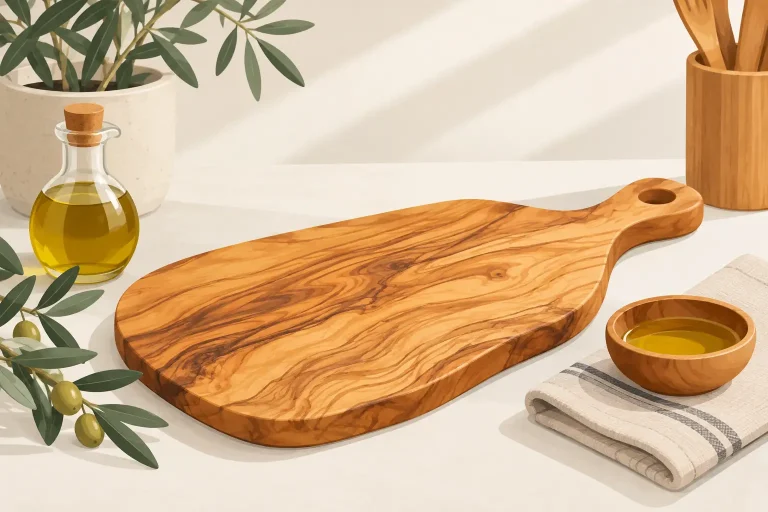
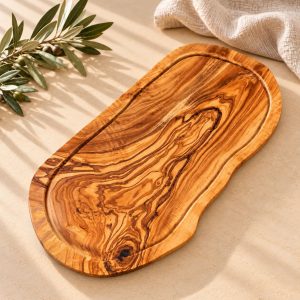
The most useful handmade olive wood products are chosen by the moments they will serve, not simply by their measurements. A long serving board earns its place during aperitifs, weekend breakfasts, and dinners where bread is passed around the table. A smaller board can become a favorite for sliced fruit, a simple lunch, or a thoughtful host gift.
For cooking every day
Cooking spoons, spatulas, rice servers, and small kitchen accessories make an immediate difference because they are always within reach. Olive wood is gentle on cookware, including enameled cast iron and nonstick surfaces. Look for a handle that feels balanced rather than overly thick, and choose the bowl shape according to what you cook. A broad spoon is useful for sautéing vegetables, while a deeper spoon is better for sauces, grains, and serving.
For serving with ease
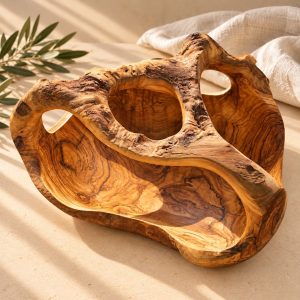
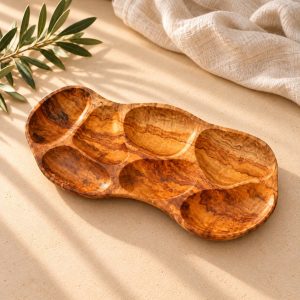
Bowls, platters, and natural-edge pieces bring warmth to food that needs little decoration. A generous bowl can hold a salad, citrus, or fresh bread. A platter gives roasted vegetables, grilled fish, or pastries a more generous presentation without becoming fussy. Natural-edge bowls are especially striking as centerpieces, but their irregular form means they may be better for display or dry foods than for tasks that require a perfectly level surface.
For gifts with real permanence
A personalized olive wood board or utensil set works beautifully for weddings, housewarmings, anniversaries, and client gifts because it is personal without being disposable. Engraving is most meaningful when kept restrained: a family name, a date, or a few words that will still feel right years from now. Gift wrapping adds a sense of occasion, but the lasting value is in the object itself – a piece made to be used, oiled, and passed along.
For boutiques, delicatessens, restaurants, and hotels, the same principle applies at a larger scale. Guests and customers respond to pieces with a clear origin. Wholesale programs with samples, custom engraving, white-label packaging, and replenishment options make it possible to offer that provenance while keeping practical ordering needs in view.
How to Recognize Genuine Craft
Not all olive wood is made in the same way. Some products are thinly finished, coated heavily, or assembled from multiple pieces to create a uniform look. These can have a place at a lower price point, but they do not offer the same material honesty or long-term feel as a carefully made piece.
A well-crafted olive wood item should feel substantial for its size. Its grain should continue naturally across the surface rather than appear printed or overly regular. The finish should be smooth and matte to softly satin, not glassy with thick varnish. Small variations in shape, color, and grain are expected. In handmade work, these are signs that the maker worked with the wood rather than against it.
Ask simple questions before buying: Was the wood responsibly sourced? Was it allowed to dry properly? Is the piece carved from one block? What finish touches food? Clear answers reveal more than a generic claim of being natural or artisanal.
Care That Keeps the Grain Beautiful
Olive wood does not need complicated care, but it does ask for a little attention. Wash it by hand with mild soap and warm water, then dry it promptly. Do not leave it soaking in the sink, and do not put it in the dishwasher. Extended heat and water can pull moisture unevenly from the wood, increasing the chance of movement or surface checking.
When the surface begins to look dry or pale, rub in a small amount of food-safe olive oil or a suitable food-grade wood oil. Let it rest for several hours or overnight, then wipe away any excess with a soft cloth. The grain will deepen again, and the wood will retain the soft finish that makes it so inviting to use.
A small crack can sometimes appear as real wood adjusts to changes in humidity, particularly in very dry homes. This is part of working with a natural material, not necessarily a sign that the piece has failed. Regular oiling and avoiding extreme temperature changes are the best preventative habits.
A More Considered Kind of Everyday Object
There is value in owning fewer things that ask to be used rather than stored away. An olive wood spoon darkens gently with meals. A board gathers the marks of long lunches and late-night snacks. A bowl becomes part of the rhythm of a home, holding lemons one week and salad the next.
Choose the piece that suits the life you actually live, then let its grain remain what it is: unrepeatable evidence of a Cretan tree, a patient workshop, and a table made more welcoming by something real.