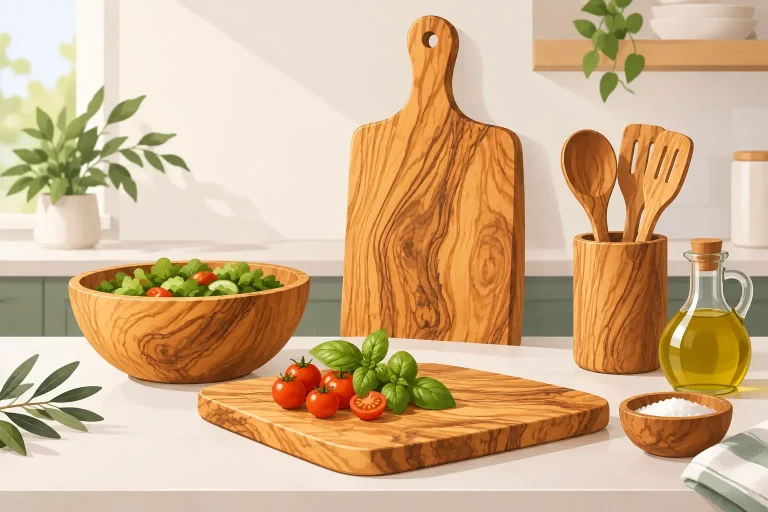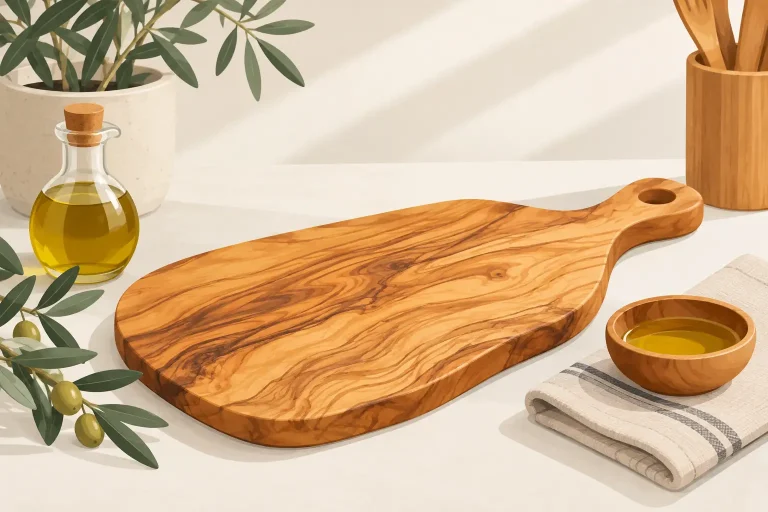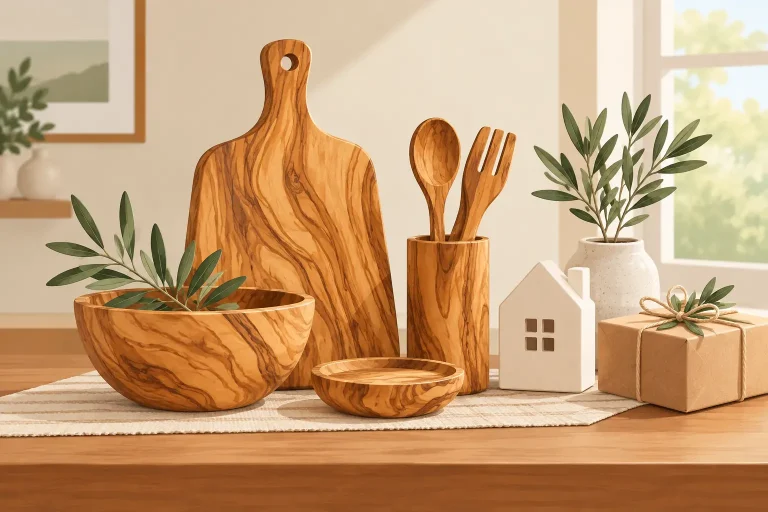
A cutting board is one of the hardest-working surfaces in a kitchen. It meets ripe tomatoes, fresh bread, herbs, raw ingredients, and the occasional hurried cleanup. That is why olive wood antibacterial properties are so often part of the conversation around olive wood boards and utensils. The material is naturally dense, beautifully grained, and long-lasting, but it also deserves a clear-eyed explanation rather than a sweeping promise.
Olive wood can be a thoughtful choice for food preparation and serving. Its natural character may help limit bacterial survival under certain conditions, yet it is not sterile and should never replace sensible kitchen hygiene. Care, construction, and the way a piece is used all matter.
What olive wood antibacterial properties really mean
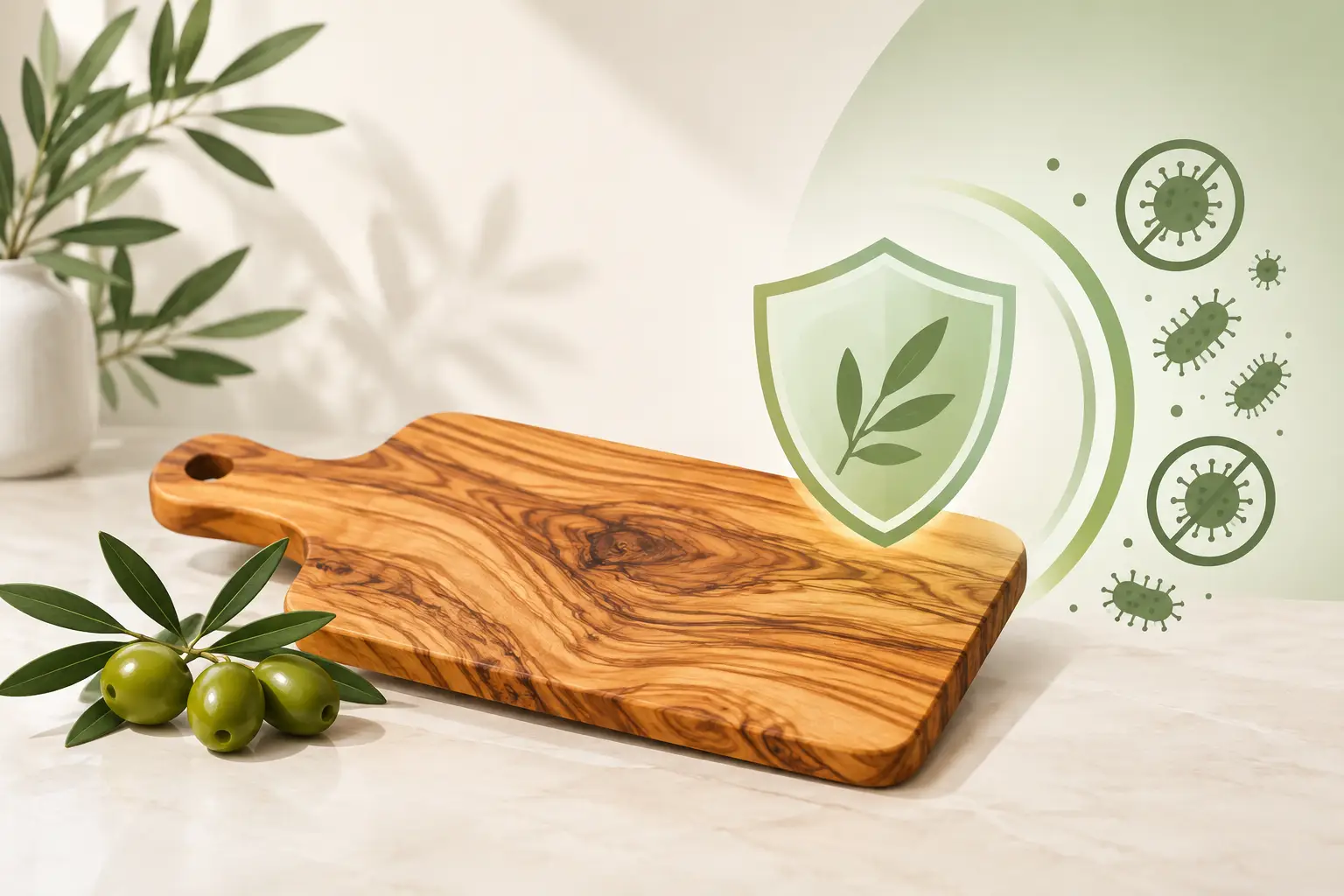
When people describe olive wood as antibacterial, they usually mean that the wood has natural characteristics that can make it less hospitable to some bacteria than certain other kitchen-surface materials. Research on wood surfaces has found that some woods can reduce bacterial survival, influenced by factors such as density, moisture movement, surface structure, and naturally occurring extractives in the wood.
Olive wood is notably hard and dense. Its close grain creates a substantial, smooth surface when properly finished, rather than the more open texture found in softer woods. The wood also contains natural oils and phenolic compounds that are part of the tree’s own chemistry. These traits are often associated with olive wood’s resistance to odors and its reputation as a practical material for kitchenware.
Still, “antibacterial” does not mean bacteria-proof. No cutting board, spoon, or serving bowl should be treated as self-sanitizing. Food residue left in deep knife marks, moisture trapped in a poorly cleaned surface, and cross-contamination from raw meat all require the same care they would on any other material. Natural properties are a helpful advantage, not a free pass to skip washing.
Why density and craftsmanship matter
The performance of a wooden kitchen piece is not only about the tree species. How the item is made makes a real difference. A board carved from a single block of well-seasoned olive wood has no glued seams where moisture can work its way in. A carefully sanded surface is easier to wipe clean and less likely to hold onto food particles than a rough, unfinished one.
At Olive Wood Shop, each piece is shaped from olive wood sourced through seasonal pruning and retired fruiting trees in Crete. The wood is dried for up to two years before carving, a patient process that helps stabilize the material. It is then sanded through five grits and finished with food-safe Cretan olive oil, without lacquer or synthetic surface coatings.
This matters because a finish should support the wood rather than seal it under a plastic-like layer. Olive oil nourishes the surface and brings forward the grain while preserving the tactile feel of the wood. With regular care, it also helps reduce excessive drying that can lead to roughness or cracking.
A dense, one-piece board will not stay flawless forever. Knife marks are part of a cutting board’s working life, especially if it is used daily. But starting with properly dried, solid olive wood gives the piece a strong foundation and helps it age with character rather than quickly becoming disposable.
Olive wood versus plastic and other surfaces
Plastic cutting boards are convenient, lightweight, and often dishwasher-safe. They can be useful for dedicated raw-protein prep, particularly in busy kitchens where high-temperature commercial sanitizing is part of the routine. Their trade-off is that knife cuts can become pronounced over time, creating grooves that need careful cleaning and eventually warrant replacement.
Olive wood asks for a little more attention, but rewards it with durability, natural beauty, and a surface that can be maintained rather than simply discarded. Its density gives it a solid feel under the knife, while its distinctive grain makes it equally at home on the counter and at the table.
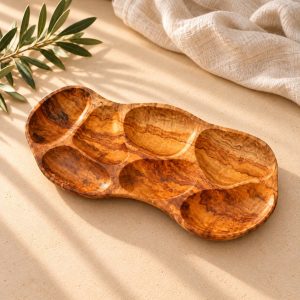
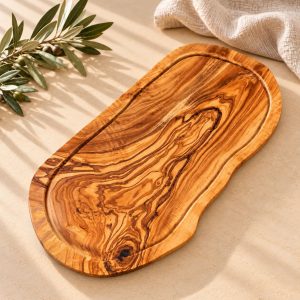
For serving bread, cheese, fruit, pastries, and charcuterie, olive wood is especially well suited. A handmade board or platter turns a simple spread into something more considered, without feeling overly precious. Each swirl, dark vein, and warm honey-colored area comes directly from the tree, so no two pieces are alike.
For raw meat and poultry, the most practical approach depends on your kitchen habits. Some cooks prefer a separate, easily sanitized board for raw proteins and reserve olive wood for produce, cooked foods, and serving. Others use wood boards for a range of prep tasks, washing them promptly and thoroughly afterward. Either approach can be sensible when cleanliness is taken seriously.
How to care for olive wood kitchenware
Good care preserves both the beauty and the practical qualities of olive wood. Fortunately, it is simple and takes only a few minutes.
Wash the piece by hand after use with warm water, mild soap, and a soft sponge or cloth. Rinse it well, then dry it immediately with a towel and stand it on its edge or rest it where air can circulate. Avoid prolonged soaking, the dishwasher, and leaving a board submerged in a sink. Extreme heat and long exposure to water can stress even very dense wood.
If a board has handled strongly scented ingredients such as garlic or onion, washing it promptly is usually enough. For a deeper refresh, a paste of coarse salt and lemon can be gently rubbed over the surface, then rinsed and dried. This is useful occasionally, not something the wood needs after every use.
Re-oil the piece when it begins to look dry, pale, or less smooth to the touch. Apply a small amount of food-safe olive oil with a soft cloth, let it absorb, and wipe away any excess. Regular, light conditioning is better than saturating the wood. A well-cared-for piece develops a richer patina over time, shaped by meals, gatherings, and daily use.
The limits worth respecting
Natural antibacterial qualities should be discussed with care because laboratory findings do not remove the variables of a real kitchen. Bacterial behavior can differ by species, temperature, humidity, contact time, and the condition of the wood. A brand-new board and a neglected board with heavy damage will not perform in the same way.
It is also wise to distinguish between a cutting board and a decorative object. A lacquered wooden tray may look similar from a distance, but its finish, construction, and suitability for direct food contact can be very different. For kitchen use, choose pieces made for food contact and finished with food-safe materials.
Inspect your board occasionally. If it develops a deep crack, persistent roughness, or a damaged area that cannot be cleaned well, it may be time to retire it from food preparation. That is not a failure of the material. It is simply good judgment, and part of treating kitchen tools with the respect they deserve.
A material made for a more considered kitchen
The appeal of olive wood reaches beyond any single functional claim. It is wood from fruiting trees that have spent decades, sometimes centuries, becoming part of the Cretan landscape. Rather than being grown for quick harvest, it is often reclaimed when branches are pruned or when an old tree has reached the end of its productive life.
That long history shows in the grain. A handmade olive wood spoon has the warmth to stir a family sauce, then rest beside the pot. A serving board can carry a simple lunch on an ordinary afternoon and a generous table of shared food when guests arrive. These are useful objects, but they are also reminders that good materials ask us to slow down enough to care for them.
Choose olive wood for its dense grain, natural character, and enduring usefulness. Wash it well, dry it promptly, oil it when needed, and let its one-of-a-kind surface become part of the meals you make and the people you gather around them.