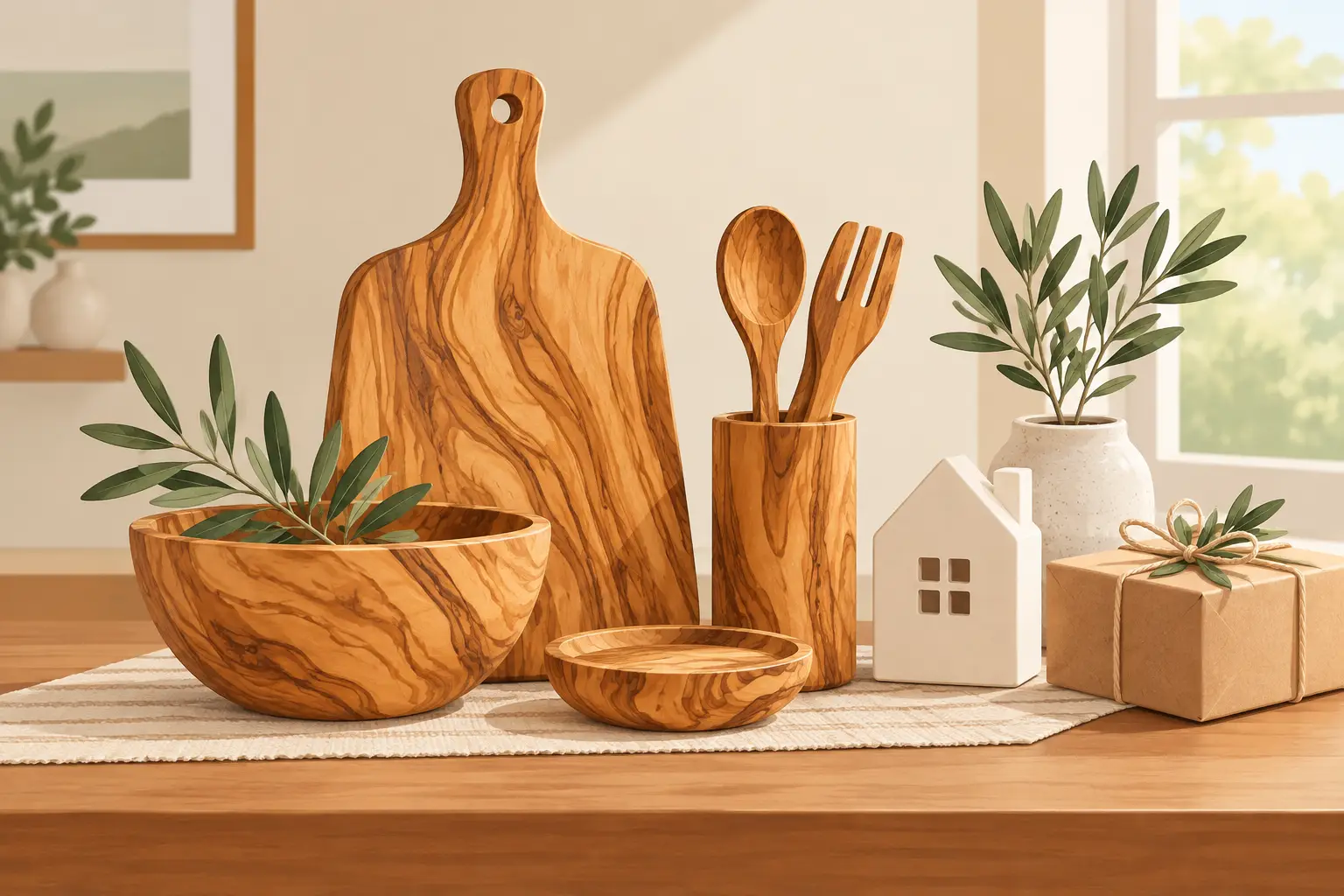
A new home rarely needs more objects. It needs the few right ones: a board set down for the first shared meal, a bowl left on the counter for lemons, a spoon reached for every evening. Olive wood housewarming gifts belong in that category. They are useful from day one, yet carry the quiet presence of something shaped slowly and meant to stay.
For a couple unpacking their first kitchen, a friend moving across the country, or hosts settling into a long-awaited home, handmade olive wood offers more than a decorative gesture. Its warm honey tones, dark veining, and flowing grain make each piece unmistakably individual. No two trees grow alike, and no two finished pieces are the same.
Why Olive Wood Feels Right in a New Home
A housewarming gift should feel personal without asking the recipient to find room for something impractical. Olive wood does both. A serving board can hold bread and cheese for guests on Friday, then become the surface for a simple lunch on Tuesday. A hand-carved bowl can serve olives at dinner or keep fruit within reach all week.
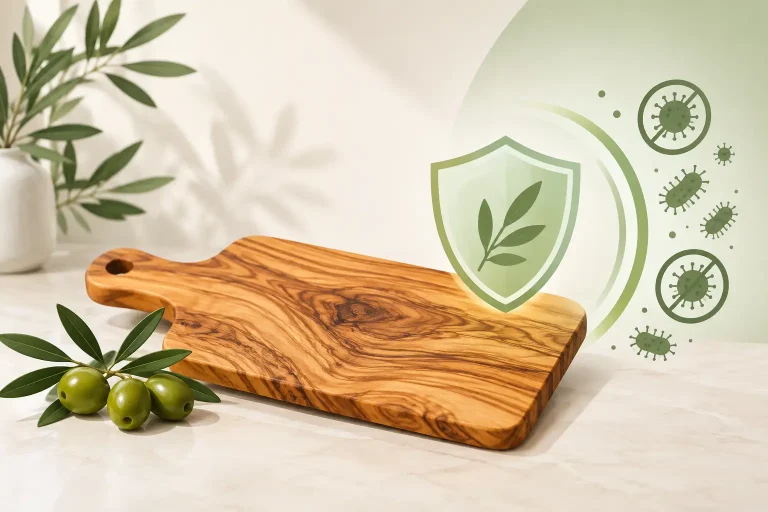
The material has a natural place in kitchens and at tables. Olive wood is dense, durable, and valued for its naturally antibacterial qualities. Its grain is expressive rather than uniform, with colors ranging from pale cream to rich brown. That variation is not a flaw to be corrected. It is the record of a living tree and the reason a handmade piece never feels factory-made.
There is also a meaningful difference in how the wood is sourced. Well-made olive wood homewares come from trees that have been seasonally pruned or from retired fruiting trees, not trees cut down simply for their timber. In Crete, olive trees are part of the landscape, the food culture, and family life. Giving a piece made from this material brings a little of that enduring relationship into a new home.
Choosing Olive Wood Housewarming Gifts by How They Live
The best choice depends less on the size of the house and more on how its residents gather, cook, and keep their space. Think about the first moments the gift will be used, rather than whether it will match a particular cabinet color.
For people who love to host
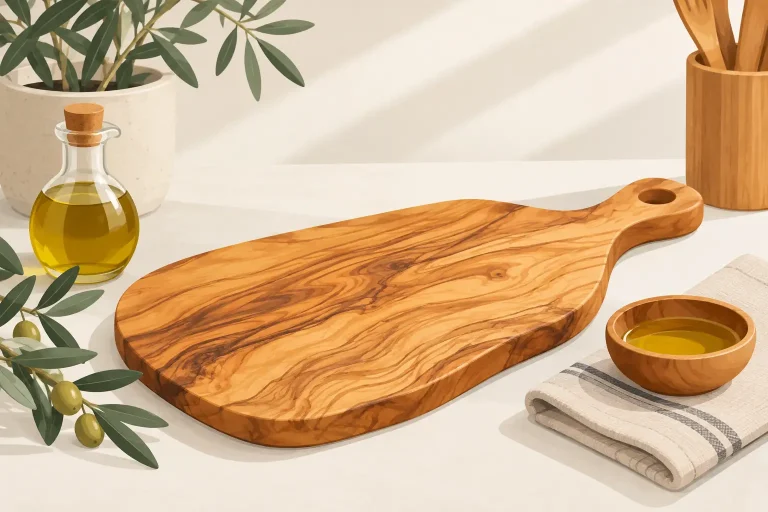
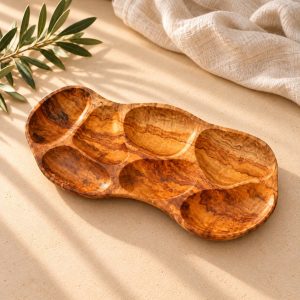
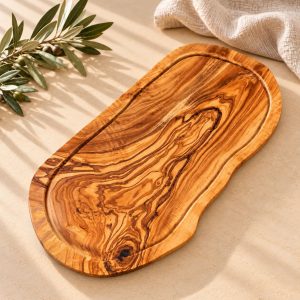
A substantial serving board or natural-edge platter is an easy, generous choice. It gives a new kitchen an instant sense of welcome, whether it is arranged with cheeses, sliced fruit, pastries, or a simple loaf of bread. Look for a one-piece board with enough surface area to be useful but not so large that it becomes difficult to store or carry.
The live edge and grain will make the board beautiful even when it is resting against a backsplash between gatherings. This is a gift that earns its place in view. If the recipients enjoy entertaining but have a compact home, a medium board is often more useful than an oversized statement piece.
For everyday cooks
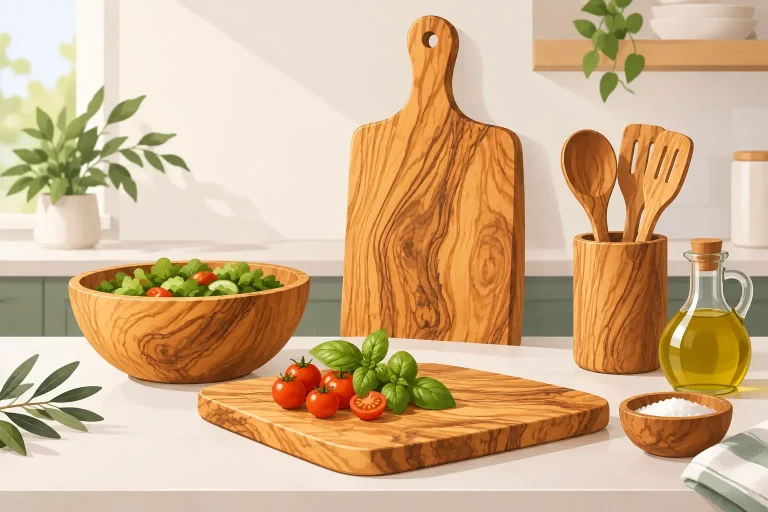
Cooking spoons, rice servers, spatulas, and kitchen utensil sets make thoughtful gifts for people who will use them daily. They are especially good for a first apartment, a newly renovated kitchen, or a home where the essentials are still being collected.
A handmade olive wood spoon feels different from a generic utensil. The handle has been shaped by hand, the bowl has its own curve, and the wood is gentle on cookware. A small set is practical without being impersonal, particularly when paired with a favorite recipe written in a card.
For a table that is still taking shape
Olive wood bowls are quietly versatile. A smaller bowl suits nuts, salt, or dips. A larger one can hold salad, fruit, or bread. Unlike matching dinnerware, a wood bowl does not demand a fully formed table setting. It works with linen, stoneware, glass, and whatever the new homeowners already have.
Choose a bowl for people who appreciate pieces that can move between kitchen and table. The natural grain gives it enough character to be left out, while its function keeps it from becoming decor for decor’s sake.
For the home that values small rituals
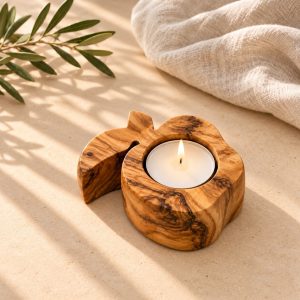
A candle holder, decorative olive wood piece, or compact basket can be the right answer when kitchen storage is limited or when the recipient already owns plenty of cookware. These gifts create warmth in an entryway, on a dining table, or beside a bed.
They are best chosen with care. Decorative pieces should still have a clear place in the home, such as holding keys, displaying a candle, or gathering small table essentials. A beautiful object is most welcome when it becomes part of a daily rhythm.
What Makes a Handmade Piece Worth Giving
Not all olive wood is made with the same patience. The difference often begins before carving. Freshly cut wood needs time to dry properly, or it can be more vulnerable to cracking and movement later. At Olive Wood Shop, wood is dried for up to two years before it is shaped in the Cretan workshop.
The best pieces are carved from a single block of wood rather than assembled from glued sections. This honors the natural flow of the grain and gives the object a more honest, sculptural feel. It also means the maker must work with what the tree provides: a bend in the wood, a knot, a deep swirl of color, or an irregular edge that cannot be repeated.
Finishing matters just as much. A food-safe olive-oil finish allows the wood to remain tactile and natural. There is no thick lacquer creating a plastic-like shine or separating the hand from the material. After five stages of sanding, the surface should feel smooth while still looking like wood, not like an imitation of it.
This approach has a trade-off. Natural wood asks for modest care, and it will not stay identical forever. It may deepen in color, develop more character, and need occasional oiling. For many people, that is precisely the appeal. The piece becomes part of the home rather than remaining frozen in the condition of a store shelf.
Add Meaning Without Overdoing It
Personalization can turn a beautiful gift into a marker of a particular beginning. A family name, a move-in date, a short phrase, or simple initials can work well on a board or serving piece. Keep the inscription restrained. Olive wood already has a strong visual voice, and a few well-chosen words allow the grain to remain the focus.
If you do not know the recipients’ style, choose function over a large engraved message. A compact inscription on the reverse side of a board can feel more intimate and gives the front room to serve food and show its natural pattern.
Gift wrapping also matters with a material like this. The moment of opening should make the recipient understand that the piece was chosen, not picked up at the last minute. A short note can explain that the wood came from pruned or retired olive trees and was shaped by hand in Crete. That small piece of provenance often becomes part of the gift’s story.
A Little Care for Years of Use
Olive wood is durable, but it is not meant for the dishwasher, microwave, or long soak in a sink. Wash it by hand with mild soap and warm water, dry it promptly, and let it air fully before putting it away. When the surface begins to look dry, rub in a small amount of food-safe olive oil or mineral oil with a soft cloth.
Avoid leaving a board in standing water or placing it directly against intense heat. These simple habits help protect the wood from drying too quickly. They also preserve the soft luster that makes olive wood so inviting at the table.
A lasting housewarming gift does not need to announce itself every time someone enters the room. It can be the board that comes out when friends arrive, the bowl that holds the season’s fruit, or the spoon that stirs dinner on an ordinary night. Choose a piece with a purpose, let its grain remain beautifully itself, and it will gather meaning with every use.