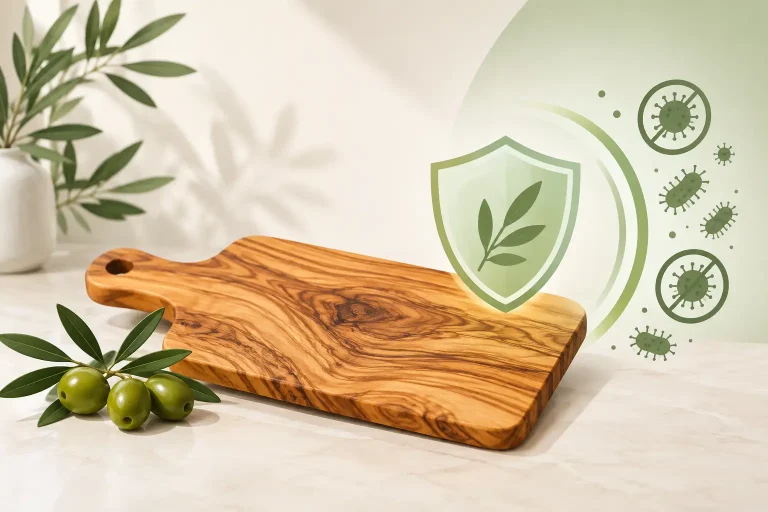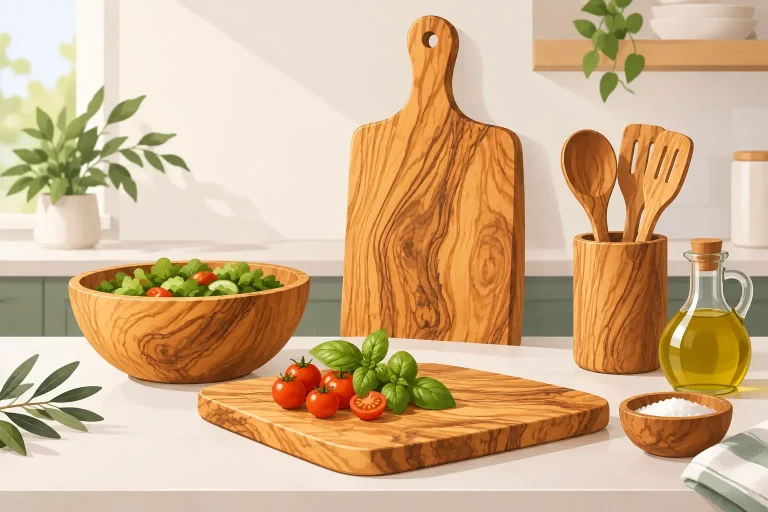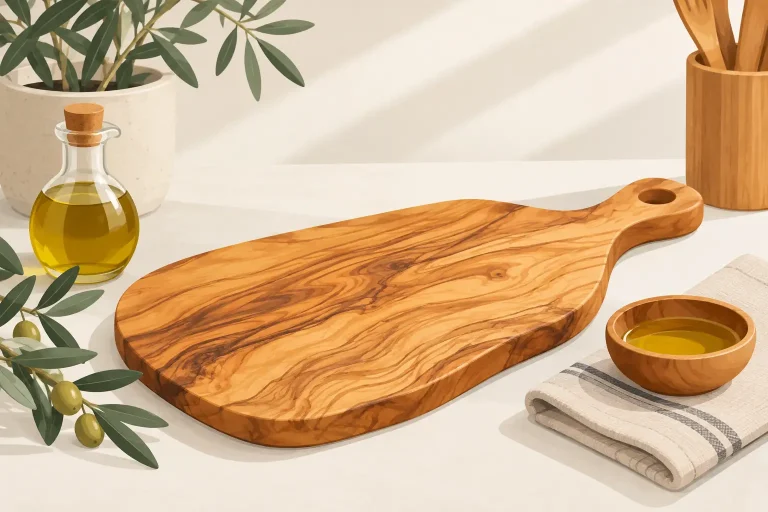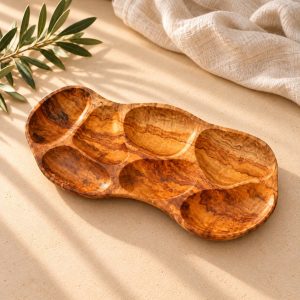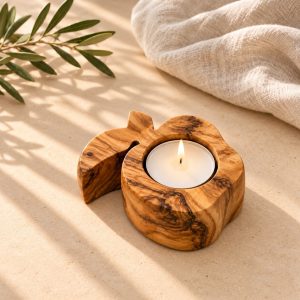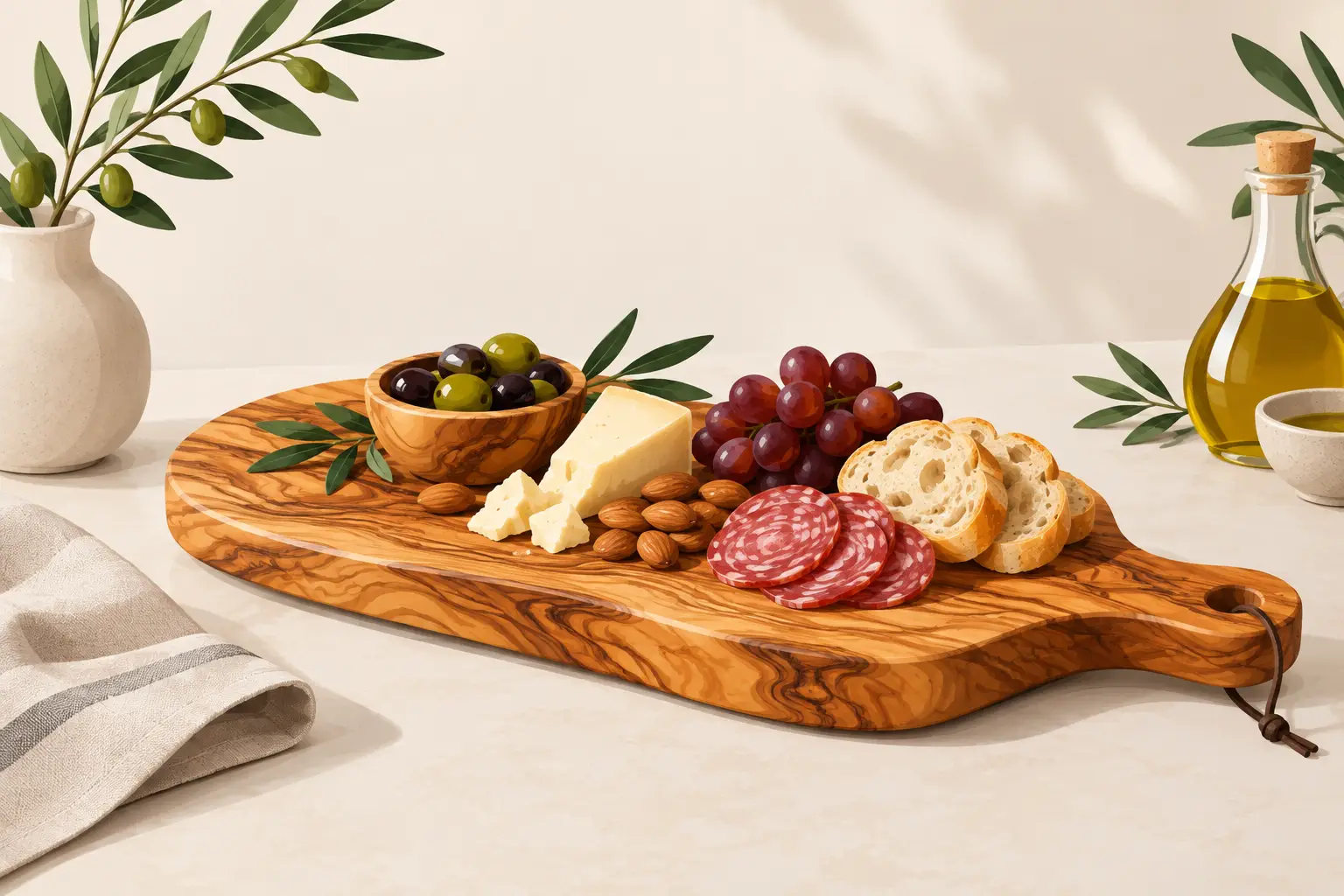
A good olive wood serving platter changes the feeling of a table before a single thing is served. Pile it with ripe figs, warm bread, sharp cheese, or small bowls of olives, and the wood brings its own presence: honeyed color, dark wandering grain, and a surface shaped by a tree that lived for generations.
This is not a piece made to disappear into a cabinet. It is made for the moments when food is passed, guests linger, and a simple spread deserves more than an ordinary plate.
What makes olive wood different
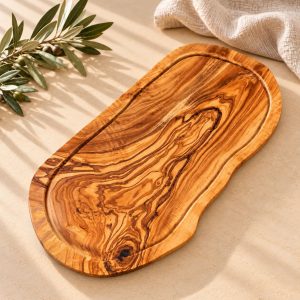
Olive wood has a character that cannot be manufactured. Its grain is often wild and dramatic, moving from creamy gold to deep brown in the same piece. Knots, small natural markings, and shifting lines are not flaws to be erased. They are the record of the tree and the reason no two platters look alike.
The material is also exceptionally dense. That density gives an olive wood platter a satisfying weight in the hand and helps it stand up to regular use. It is well suited to serving antipasti, fruit, pastries, cheese, charcuterie, and bread, while its naturally smooth surface feels warm and welcoming rather than overly polished.
The difference begins long before carving. At Olive Wood Shop, the wood comes from seasonal pruning and retired fruiting trees in Crete, not trees cut down simply to make tableware. Each piece is carved from a single block of wood, then left to dry for up to two years. That patient drying matters. It helps stabilize the wood before shaping and gives the finished platter a better chance of serving a home for years.
A serving piece with a real point of view
Factory-made serveware often aims for perfect sameness. A handmade olive wood serving platter takes the opposite approach. Its outline may be gently irregular, its edge may follow the natural shape of the timber, and its grain will always lead the design.
That variation is worth choosing intentionally. If you need twenty matching platters for a tightly controlled formal place setting, a uniform material may be the practical answer. But if you want a table that feels collected, personal, and connected to the food on it, olive wood offers something far more memorable.
A platter can do more than carry food. Set at the center of a table, it softens ceramics, linen, glass, and metal. On a kitchen counter, it can hold a loaf of sourdough or a bowl of lemons without looking like clutter. For a casual gathering, it gives even a few carefully chosen ingredients the feeling of an occasion.
The beauty of one-piece carving
A platter carved from one solid piece of olive wood has a quiet integrity. There are no glued seams crossing the surface and no composite layers hidden beneath a veneer. The grain runs continuously through the form, which is part of what makes each piece feel whole.
This construction also makes the platter especially appealing as a gift. A housewarming or wedding gift should feel considered, not generic. A piece with a visibly unique grain pattern, made from a tree with a long working life, carries a story without needing a label or a speech.
How to choose the right olive wood platter
Start with how you actually host. A long, narrow platter works beautifully for sliced bread, tapas, or a line of small bites. A broader oval or organic-shaped piece gives cheese, fruit, and charcuterie room to spread out. Smaller platters are useful for two-person meals, breakfast pastries, or a simple offering of olives and almonds alongside drinks.
Consider depth as well as size. A shallow platter is easy to layer with dry foods, while a gently raised edge is helpful for juicy fruit, marinated vegetables, or anything dressed with oil. For everyday serving, choose a shape you will be comfortable carrying from kitchen to table. The largest piece is not always the most useful one.
Grain is a matter of preference, not quality ranking. Some people are drawn to bold, high-contrast swirls. Others prefer a calmer, lighter surface. Both are genuine expressions of olive wood. When buying handmade pieces, it helps to welcome the particular platter you receive rather than expect an exact copy of a photographed sample.
Serving platter or cutting board?
Olive wood can be used for both, but the purpose matters. A serving platter is ideal for presenting ready-to-eat foods. It may show knife marks over time if it becomes your everyday chopping surface, especially when used with sharp blades or hard ingredients.
If you want one piece primarily for cutting, choose a thicker board designed for that work. If presentation is the priority, reserve your platter for serving and let its surface develop a softer, more graceful patina. There is no need to keep it untouched, but thoughtful use preserves the finish and the visual pleasure of the grain.
Finishing matters as much as carving
Some wooden serveware gets its shine from lacquer or synthetic coatings. That can create a uniform look, but it puts a hard layer between the wood and the hand. A natural finish allows the material to remain what it is.
A well-made olive wood platter is sanded carefully through multiple grits until it feels smooth, then finished with food-safe olive oil. At Olive Wood Shop, each piece receives five stages of sanding and an olive-oil finish with no lacquer. The result is tactile rather than glossy: a surface that feels like real wood and can be refreshed at home when it begins to look dry.
This finish also asks a little care from its owner. That is not a drawback so much as part of living with a natural material. Wood responds to water, heat, and dry indoor air. Treat it with ordinary attention, and it becomes more beautiful through use.
Caring for an olive wood serving platter
Wash the platter by hand with warm water and a mild soap, then dry it promptly with a towel. Do not leave it soaking in the sink, put it in the dishwasher, or expose it to a microwave or prolonged direct heat. Extreme moisture and heat can stress any natural wood.
When the surface starts to look pale or dry, rub in a small amount of food-safe olive oil or another food-safe mineral oil using a soft cloth. Let it absorb, then wipe away any excess. How often you oil it depends on how often it is washed and how dry your home is. A platter used weekly may appreciate a refresh every few weeks; one used occasionally may need it only from time to time.
Do not be alarmed by gradual changes in color. Olive wood often deepens and gains richness with use. Small signs of age are part of a handmade piece’s life, much like the softened handle of a favorite cooking spoon or the worn linen of a well-loved tablecloth.
A more thoughtful way to serve
There is a reason olive wood belongs so naturally at a shared table. It comes from a landscape where meals are often unhurried, ingredients are allowed to speak for themselves, and useful objects are made to be kept. The platter does not need to compete with the food. It gives the food a grounded, generous place to land.
For a gift, choose a shape that suits the recipient’s life rather than chasing a trend. For your own home, choose the piece whose grain makes you pause. Then bring it out often – for the simple weekday snack as much as the long Sunday lunch – and let it become part of the hospitality people remember.