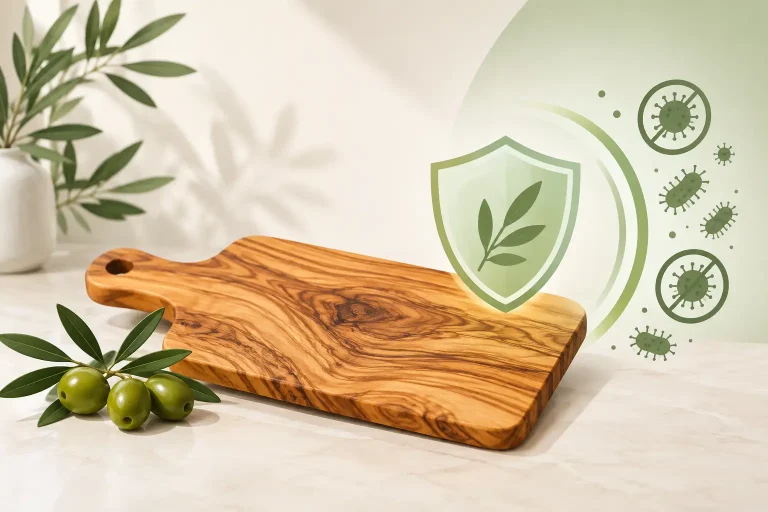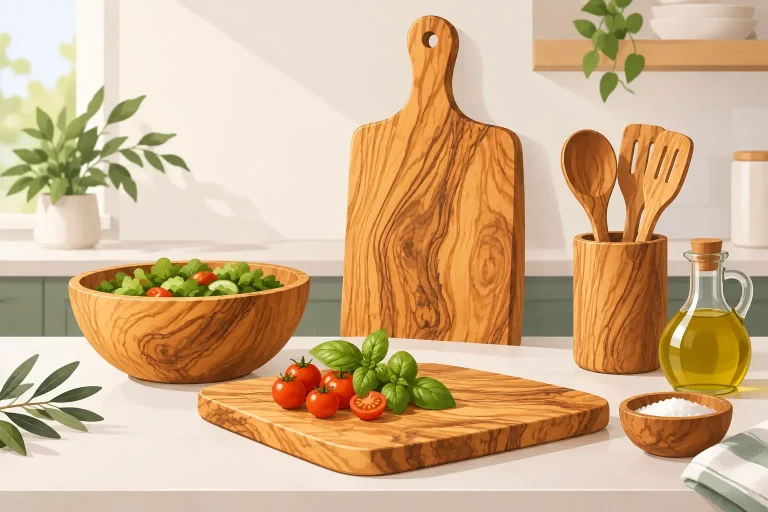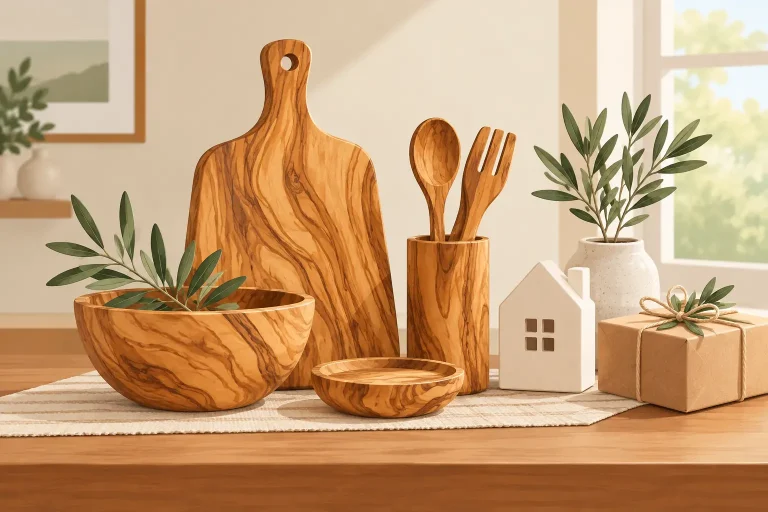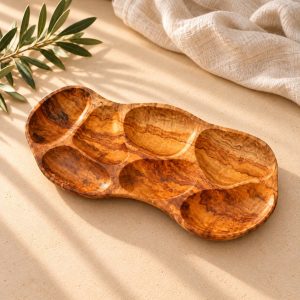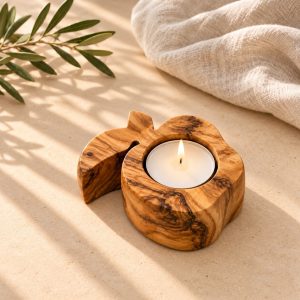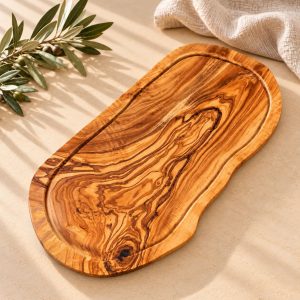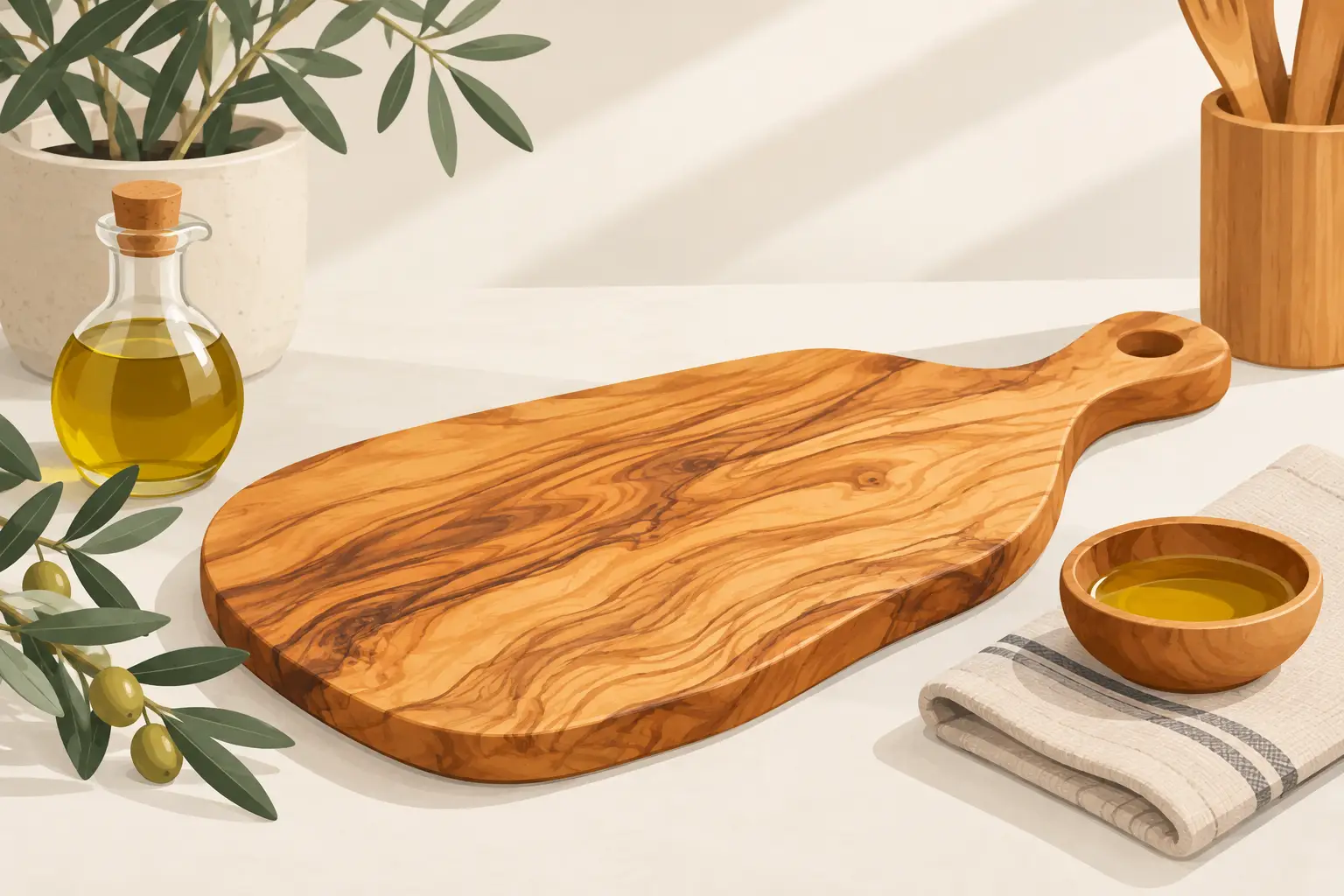
A handmade olive wood board earns its character at the table: a darker patina where it has been oiled, faint marks from a favorite knife, and grain that becomes richer with use. These olive wood care instructions are simple, but they matter. Olive wood is exceptionally dense and naturally beautiful, yet it is still real wood shaped from a living tree. It responds best to gentle washing, thorough drying, and occasional oiling.
At Olive Wood Shop, each piece is carved from a single block of seasoned Cretan olive wood, dried for up to two years and finished without lacquer, using food-safe Cretan olive oil. That natural finish lets the grain remain honest and tactile. It also means your piece benefits from the same small, steady care you would give any well-made wooden object.
Daily Olive Wood Care Instructions
For everyday cleaning, wash olive wood by hand in warm water with a small amount of mild dish soap. Use a soft sponge or cloth and clean both sides of a board, not only the surface that touched food. This helps the wood take in moisture evenly and reduces the chance of uneven movement over time.
Rinse promptly, then dry immediately with a kitchen towel. Stand a cutting board or serving board on its edge until it is fully dry, allowing air to reach both sides. Bowls, spoons, and rice servers should also be dried rather than left in a wet dish rack.
A little water during washing is perfectly normal. The problem is prolonged exposure. Never leave olive wood soaking in the sink, and do not put it in a dishwasher. Dishwasher heat, long wash cycles, and detergent can strip the wood of its natural oils, leaving it pale, dry, or prone to cracking. For the same reason, olive wood should not be used in a microwave or left near a hot burner, radiator, or direct source of heat.
When to Oil Olive Wood
Olive wood does not need oil after every wash. Let its appearance guide you. When the surface looks dry or lighter than usual, feels slightly rough, or loses the soft depth of its grain, it is ready for conditioning. For a frequently used cutting board, this may be every few weeks. A decorative bowl or serving piece used occasionally may only need attention a few times a year.
Use a food-safe oil suitable for wooden kitchenware. Pure olive oil has long been used on olive wood, especially on pieces finished in the traditional Cretan way. Apply a small amount with a clean, lint-free cloth, working it into the entire surface, including the sides, handle, and underside. A thin, even coat is better than a heavy one.
Leave the oil to absorb for several hours or overnight, then wipe away any excess. The wood should feel nourished, not greasy. If it quickly drinks in the first coat, apply a second light coat after the first has settled.
There is a small trade-off with any natural oil finish: it asks for occasional renewal, but it avoids the sealed, plastic-like feel of lacquer. The reward is a surface that can age gracefully and be refreshed rather than hidden beneath a permanent coating.
Choosing the Right Oil
A dedicated food-safe wood conditioner or mineral oil is a practical option for people who prefer a neutral, stable finish. Food-grade beeswax blends can add a little extra protection and a soft sheen, particularly on serving boards and bowls.
If you use olive oil, apply it sparingly and wipe away excess carefully. Too much oil can leave a tacky surface. Avoid vegetable oils that can turn rancid, such as sunflower, corn, or canola oil. The goal is not to saturate the wood. It is to restore the moisture balance that keeps the grain looking alive.
Removing Food Odors and Light Stains
Garlic, onion, citrus, and richly colored foods can leave traces on any natural serving surface. Usually, a warm wash with mild soap is enough. If an odor lingers, rub the area gently with a cut lemon and a little coarse salt, then rinse and dry at once. Let the piece air-dry completely before adding a light coat of oil.
For a light stain on a cutting board, make a soft paste with baking soda and water. Rub it gently along the grain with a cloth, rather than scrubbing aggressively. Rinse, dry, and oil once the board is fully dry. This treatment is best used occasionally, not as a routine cleaner, because repeated abrasion can dull the finely sanded surface.
Avoid bleach, harsh disinfectants, and strong degreasers. Olive wood is naturally dense and has long been valued in the kitchen, but harsh chemicals are not needed for normal care. They can dry the fibers and disturb the warm, natural color created by the oil finish.
What to Do If Olive Wood Feels Dry or Rough
Dryness is not a failure. It is simply wood asking for oil. If a spoon feels less smooth after many washes or a board develops a pale, thirsty look, clean it, dry it thoroughly, and apply a thin coat of food-safe oil. In most cases, the surface will regain its depth by the next day.
Very fine raised grain can sometimes appear after washing, especially when a piece is new or the air is particularly dry. Once the item is completely dry, gently smooth the area with very fine sandpaper, following the grain. Wipe away dust, then oil the surface. A light touch matters here. Handmade olive wood is shaped through multiple sanding stages to preserve its natural curves, not to become perfectly uniform.
Small checks or hairline cracks can occur when wood experiences sudden changes in temperature or moisture. First, stop exposing the piece to water and allow it to dry slowly at room temperature. Do not place it in the sun or near heat to speed the process. Whether a crack needs repair depends on its size, location, and intended use. A tiny surface check on a decorative piece may remain part of its natural story, while a deep crack in a food board deserves professional assessment.
Care for Cutting Boards, Bowls, and Utensils
Different olive wood pieces meet different kinds of use. A cutting board faces moisture, knife marks, and frequent washing, so regular oiling is part of its working life. Use both sides of a reversible board when possible. This helps it wear evenly and lets the grain develop with balance.
Serving boards and platters are more forgiving, though they should still be washed soon after use with wet or oily foods. If you are serving cheese, bread, fruit, or charcuterie, place the board away from direct sunlight and wipe it clean after the meal rather than leaving food residue overnight.
Bowls are best treated as serving pieces, not storage containers for wet foods. Do not leave salad dressing, fruit, or water sitting in a bowl for extended periods. Wooden spoons and spatulas can be washed after cooking and dried promptly. Their dense olive wood holds up beautifully to daily kitchen work when not left submerged.
Let Natural Variation Remain Part of the Piece
Olive wood is prized because no two pieces are alike. A pale streak, dark knot, swirling grain, or gentle shift in shape is not something to correct. It is evidence of the tree and of hand shaping from a single piece of wood. Unlike factory-made kitchenware, handmade olive wood was never meant to be identical from one board or bowl to the next.
Good care preserves that individuality without trying to freeze it in time. Use your board for a long lunch, pass the salad bowl around a crowded table, and let the serving spoon become the one everyone reaches for. Wash gently, dry patiently, oil when the wood asks for it, and allow the piece to grow more familiar with every meal.