A spoon that stirs tomato sauce, a board that carries warm bread to the table, a bowl piled with lemons – these are objects that should feel good to use and safe to welcome into daily life. So, is olive wood food safe? Yes, when it is properly dried, carefully made, and finished with a food-safe oil rather than varnish or lacquer.
Olive wood has long been used for cooking and serving throughout the Mediterranean. Its warm color and dramatic grain are part of the appeal, but its density matters just as much. A well-made olive wood piece is a practical natural material, not merely a decorative one. Still, the answer depends on how the wood was prepared, what was applied to its surface, and how you care for it once it reaches your kitchen.
Is olive wood food safe when left natural?
Olive wood itself is suitable for contact with food. It is a dense hardwood with a close grain, which gives it a smooth, substantial feel in the hand and helps it stand up well to everyday use. Unlike a painted or coated surface, unfinished wood does not introduce an artificial top layer that can chip into food over time.
But “natural” should not mean rushed or raw. Freshly cut wood holds considerable moisture. If it is shaped and sold too quickly, it can warp, split, or develop rough areas that are difficult to keep clean. Proper seasoning is part of food safety as well as good craftsmanship.
At Olive Wood Shop, wood comes from seasonal pruning and retired fruiting trees, never from trees felled simply for kitchenware. Each piece is dried for up to two years before it is carved. That patience helps stabilize the wood, so a serving board, spoon, or bowl is better prepared for the changing conditions of a real kitchen.
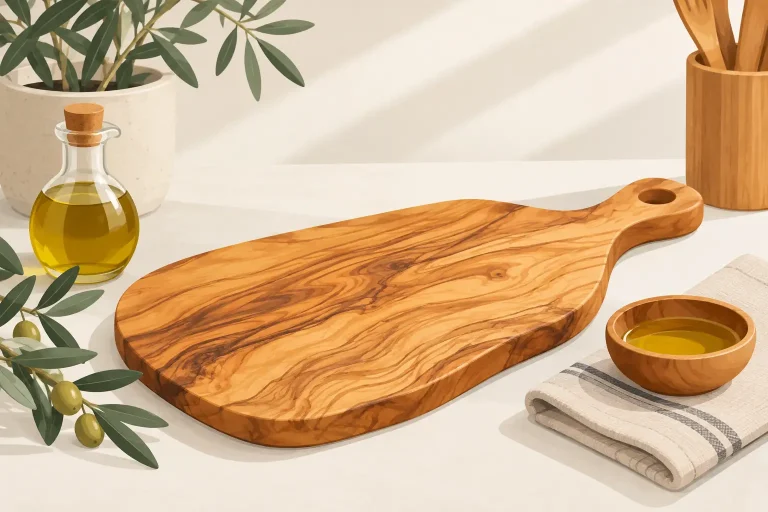
The finish is equally important. Olive wood intended for food use should be treated with a food-safe oil, such as olive oil or a suitable food-grade mineral oil, rather than lacquer, polyurethane, stain, or an unknown glossy sealant. A natural oil finish nourishes the fibers and brings out the grain without placing a synthetic coating between the food and the wood.
Why the finish matters as much as the wood
A very shiny wooden bowl can look polished, but shine alone does not tell you whether it is appropriate for food. Some mass-produced items are coated with decorative finishes designed for display, not for serving. If the maker cannot clearly explain the finish, it is sensible to reserve that piece for dry décor rather than use it with food.
A food-safe olive-oil finish has a quieter look. It gives olive wood depth and a gentle luster, but you can still feel the wood rather than a thick film over it. Over time, this finish may soften with washing and use. That is normal. Wood is a living material in the sense that it responds to moisture, heat, and dryness, even after it has been shaped.
For this reason, a piece finished only with olive oil benefits from occasional re-oiling. The care is simple and becomes part of the pleasure of owning a handmade object. A small amount of olive oil worked into clean, dry wood can refresh its color and help prevent it from becoming dry or thirsty-looking.
What olive wood is best for
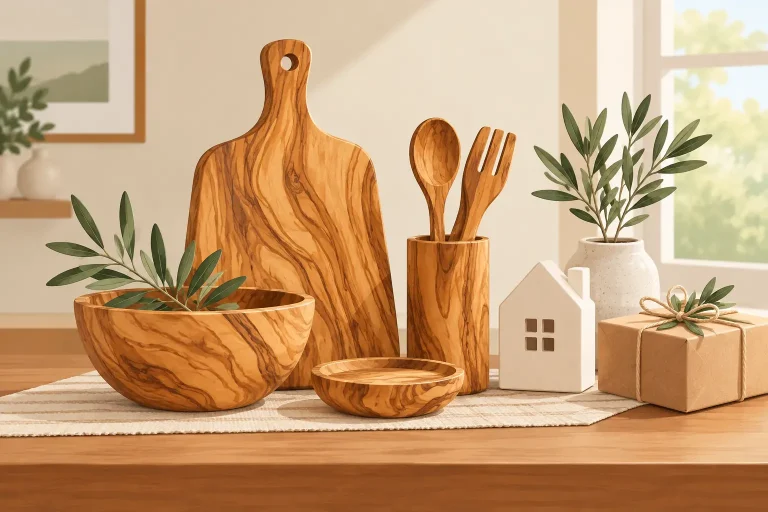
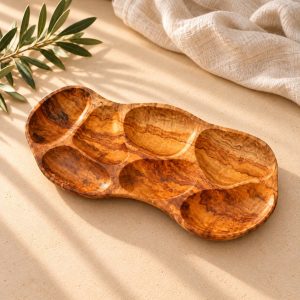
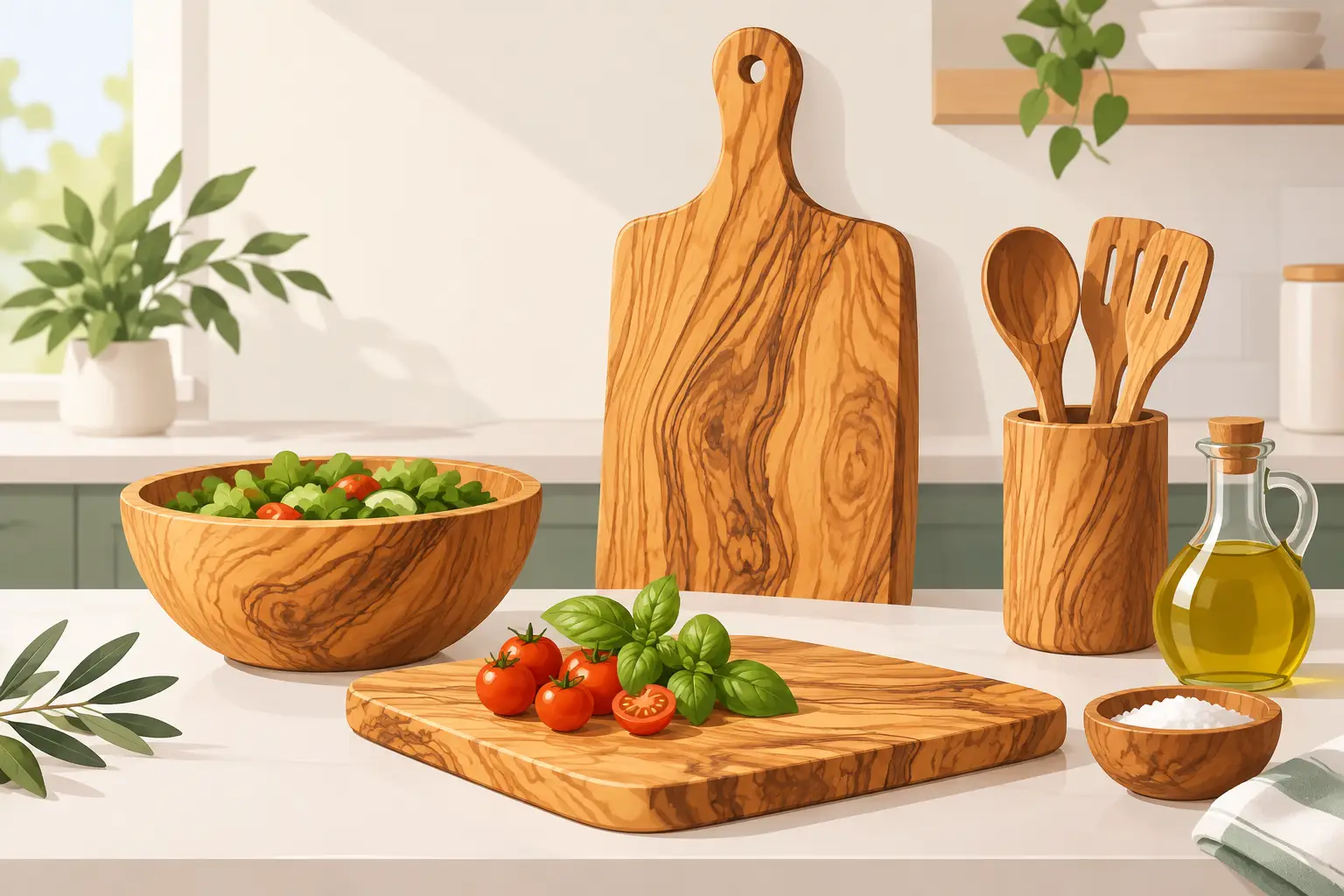
Olive wood is especially at home with serving and preparation tasks. A platter can hold cheese, bread, fruit, or pastries. A bowl can serve salad, olives, nuts, or a generous pile of summer tomatoes. Spoons and spatulas are gentle on cookware and feel warm in the hand.
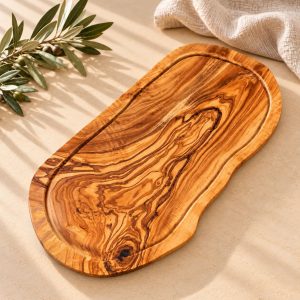
For cutting boards, olive wood is a handsome choice for bread, vegetables, herbs, cheese, and charcuterie. Its density makes it durable, while the individual grain turns even a simple board into a table piece. A one-piece carving is particularly valuable: it avoids glued seams that may weaken or separate with repeated moisture and use.
There are a few sensible limits. Do not use olive wood in a microwave, dishwasher, or oven. Do not leave it submerged in water, and do not use it as a trivet for a scorching-hot pan. Prolonged soaking and extreme heat can pull moisture unevenly through the wood, increasing the chance of cracks or movement.
If you regularly prepare raw meat, poultry, or fish, consider keeping a dedicated board for that purpose and another for ready-to-eat foods. This is a useful kitchen practice with any board material. Wash the board promptly after use and allow it to dry fully in the open air before storing it.
How to clean olive wood safely
Olive wood does not need complicated treatment. After use, wash it by hand with warm water, a mild dish soap, and a soft sponge or cloth. Rinse briefly, dry it with a towel, and stand it on its edge or leave it where air can circulate until it is completely dry.
Avoid long soaking, harsh bleach, and abrasive scouring pads. These can strip the wood’s protective oils and leave the surface rough or dry. A heavily perfumed cleaner can also leave a scent behind, which is not ideal for a bowl used for fruit or a board used for bread and cheese.
When the surface begins to look pale, dry, or less richly colored, apply a thin layer of food-safe olive oil. Let it rest for several hours or overnight, then wipe away any excess with a clean cloth. There is no need to saturate the piece. A little oil, applied regularly, is kinder to the wood than an occasional heavy treatment.
If a raised grain or a small rough spot develops after washing, a very light sanding with fine sandpaper can restore the smooth feel. Follow with oil once the surface is clean and dry. Small changes are part of the honest character of natural wood, but attentive care will keep a well-made piece useful for years.
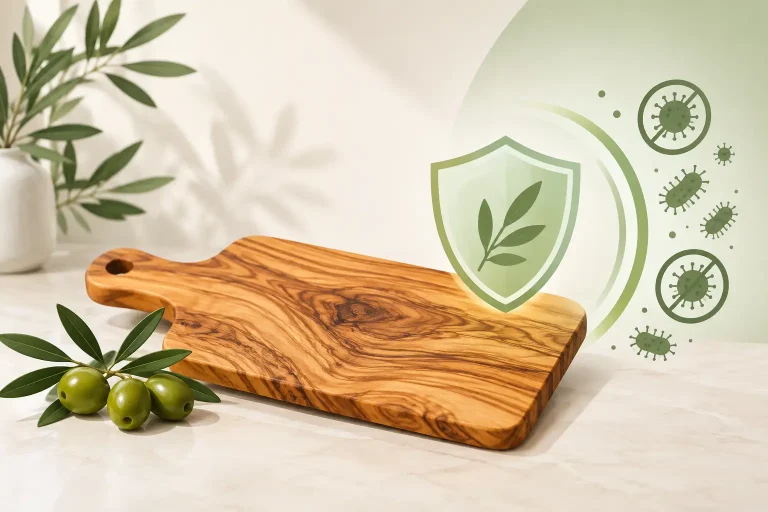
Natural antibacterial properties do not replace cleaning
Olive wood is often valued for its dense structure and naturally occurring compounds, and it has a long history in food preparation. Yet no wooden utensil or cutting board should be treated as self-cleaning. Food safety still comes down to good habits: wash after use, dry thoroughly, and avoid cross-contamination.
This distinction matters because responsible craftsmanship is not about making exaggerated promises. The beauty of olive wood is that it performs well with ordinary, thoughtful care. You do not need harsh chemicals or complicated routines, but you do need to clean it properly.
How to choose a food-safe olive wood piece
Look beyond the pattern of the grain. Ask whether the wood was fully dried, whether it was carved from a single block, and what finish was used. A trustworthy maker should be able to answer plainly.
A handcrafted piece may have small differences in shape, grain, and tone. Those variations are not faults. They are evidence that the wood was respected for what it is rather than forced into factory uniformity. Five stages of sanding can leave the surface smooth while allowing the grain to remain visible and tactile.
Check the piece in your hands when it arrives. It should feel smooth, solid, and free of flaking coatings. A faint wood-and-oil scent is normal; a strong chemical smell is not. For a gift, this clarity matters too. A food-safe bowl or board is more than a beautiful object to unwrap – it is something meant to become part of breakfasts, celebrations, and the meals people remember.
A material made for the table
Olive wood asks for a little more care than stainless steel or plastic, and that is part of its honest trade-off. It cannot be tossed into the dishwasher and forgotten. In return, it offers a naturally beautiful surface, a long useful life when cared for, and a story that begins in a pruned Cretan grove rather than on a factory line.
Choose well-dried olive wood with a clearly stated food-safe oil finish, wash it gently, and oil it when needed. Then let its grain gather the marks of ordinary use: the bread broken, the salads shared, and the hands that reach across the table.